A word woven through time.
Before there is a cloth, there is a name. Trace one proposed linguistic path through centuries of living languages.
THE JOURNEY OF A WORD
Language, like cloth,
travels.
शाटिका · śāṭikā — a long strip of cloth · Sanskrit. Śāṭikā is commonly presented as an antecedent of "sari" or "saree." A proposed path through Prakrit forms is śāṭikā → sāḍiyā → sāṛī. This simplified chain is illustrative, not a settled etymological proof.
Regional terms have their own histories. Do not assume all derive directly from the same Sanskrit word.
Before the modern
saree.
Histories of South Asian dress describe early draped garments such as the antariya and uttariya; some accounts also discuss a chest covering called stanapatta. Archaeological traces of ancient cotton, literary descriptions in Sanskrit and Buddhist traditions, and later temple sculptures all illuminate textile history. None alone proves an unbroken, unchanged form of the modern saree.
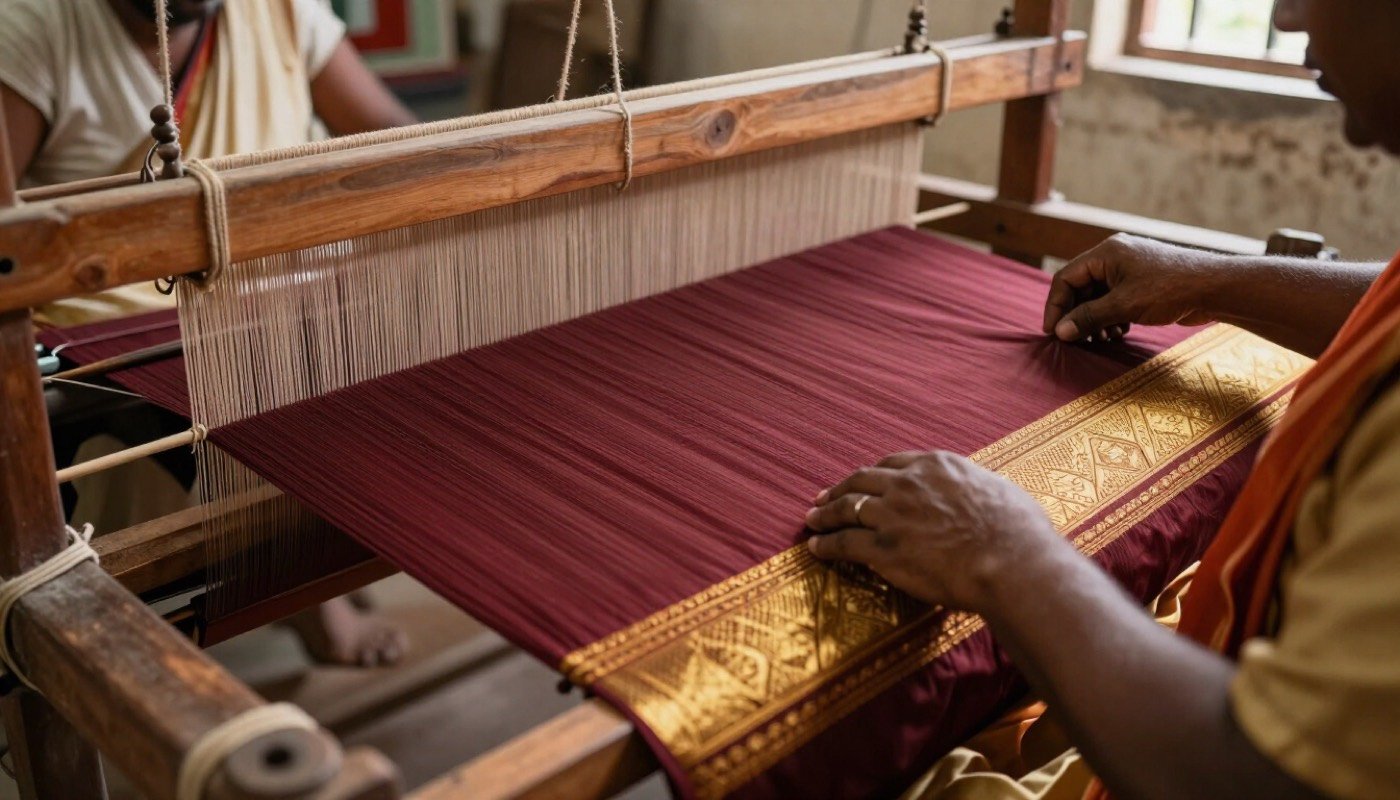
Placeholder image · replace with a museum or Photograph of early textile evidence
Background reading: V&A · Indian textiles ↗ and V&A · Textile collections ↗. Images on this site are placeholders and should be replaced with authentic photographs of the named weaves and makers.