Cloth across centuries.
A selective timeline of materials, movements and makers. History is not a single straight thread; follow its many crossings.
Time leaves
its pattern.
Select a chapter to look closer.
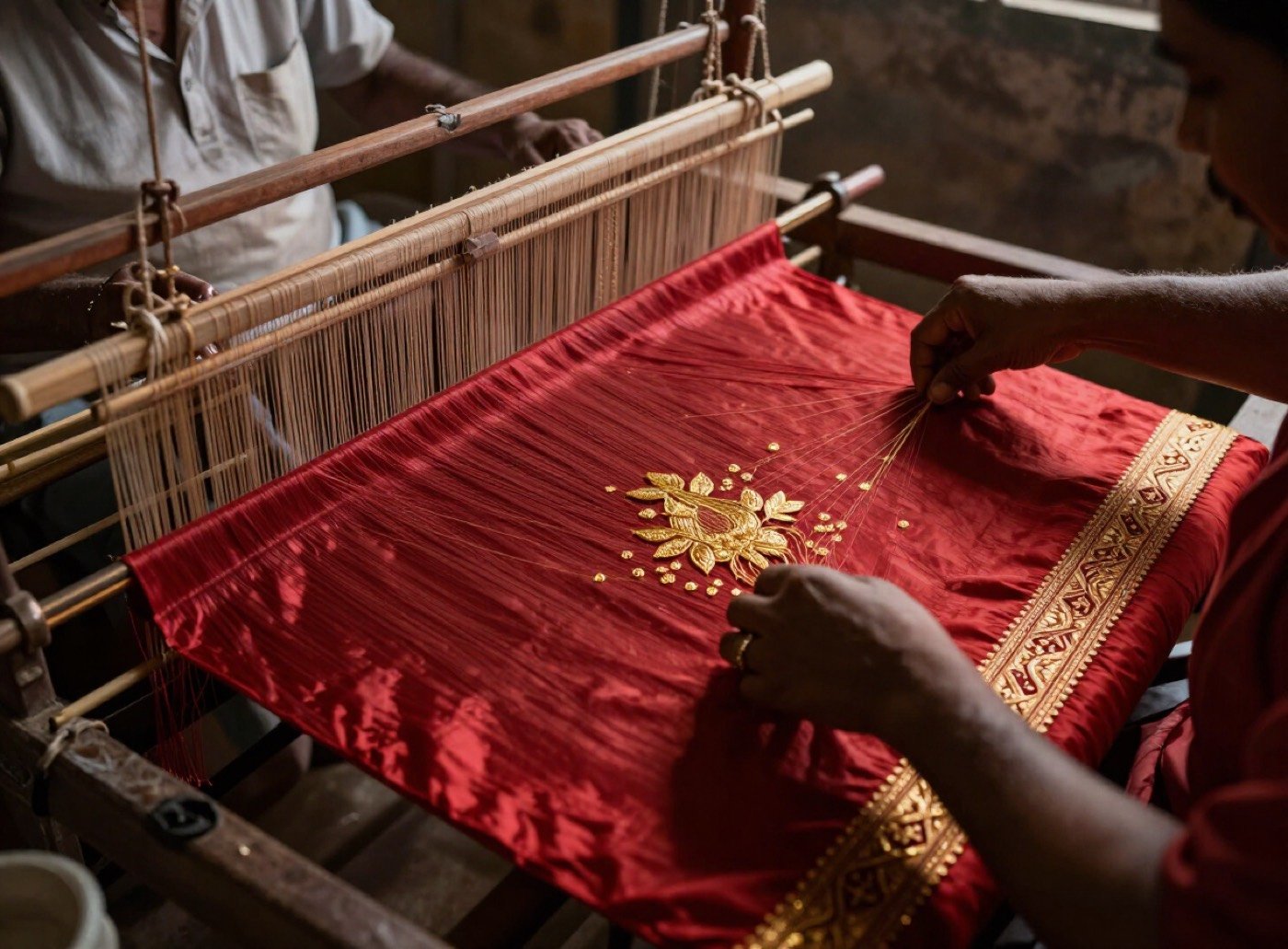
Cotton and the skills of spinning and weaving have deep roots in the subcontinent. Surviving fibres, impressions and tools tell a cautious story.
Unstitched cloth was arranged around the body in many ways; antariya and uttariya are terms used in histories of dress.
Sculptural depictions show changing silhouettes, ornaments and ways of wearing cloth.
Temple, court and community patronage helped regional weaving centres develop distinctive textiles.
Brocades, metal-thread work and fine patterned cloth flourished across interconnected centres.
Textiles became central to debates about labour, industry and self-reliance during the Swadeshi and Khadi movements.
Weavers, cooperatives, designers and institutions continue to adapt, document and sustain handloom traditions.
Background reading: V&A · Indian textiles ↗ and V&A · Textile collections ↗. Images on this site are placeholders and should be replaced with authentic photographs of the named weaves and makers.